

Webinars have become essential tools for B2B marketers looking to generate qualified leads and build meaningful relationships with prospects. The right webinar platform can transform your lead generation efforts, helping you capture contact information, demonstrate expertise, and nurture prospects through your sales funnel.
Webinars have become essential tools for B2B marketers looking to generate qualified leads and build meaningful relationships with prospects. The right webinar platform can transform your lead generation efforts, helping you capture contact information, demonstrate expertise, and nurture prospects through your sales funnel.
Why Webinars Are Essential for B2B Lead Generation
Webinars offer unique advantages for B2B marketers that other content formats simply cannot match. They provide an interactive platform where you can demonstrate expertise while capturing valuable lead information from attendees who are genuinely interested in your topic.
Unlike static content, webinars allow real-time engagement through Q&A sessions, polls, and chat features. This interaction builds trust and helps you understand prospect needs more deeply than traditional marketing materials.
The lead quality from webinars typically exceeds other channels because attendees invest time to join your session. This time investment indicates genuine interest and buying intent, making webinar leads more likely to convert into customers.
Webinar Benefits for B2B Marketers
High-quality lead generation happens naturally when prospects register for your webinar. The registration process captures contact information from people actively seeking solutions to their business challenges.
Expert positioning becomes easier when you can demonstrate knowledge through live presentations and answer questions in real-time. This builds credibility that’s difficult to achieve through other marketing channels.
Relationship building accelerates through face-to-face interaction, even in virtual settings. Prospects get to know your team personally, which is crucial for B2B sales success.
Content repurposing opportunities multiply with recorded webinars. You can create blog posts, social media content, email sequences, and sales materials from a single webinar session.
Essential Features for B2B Webinar Software
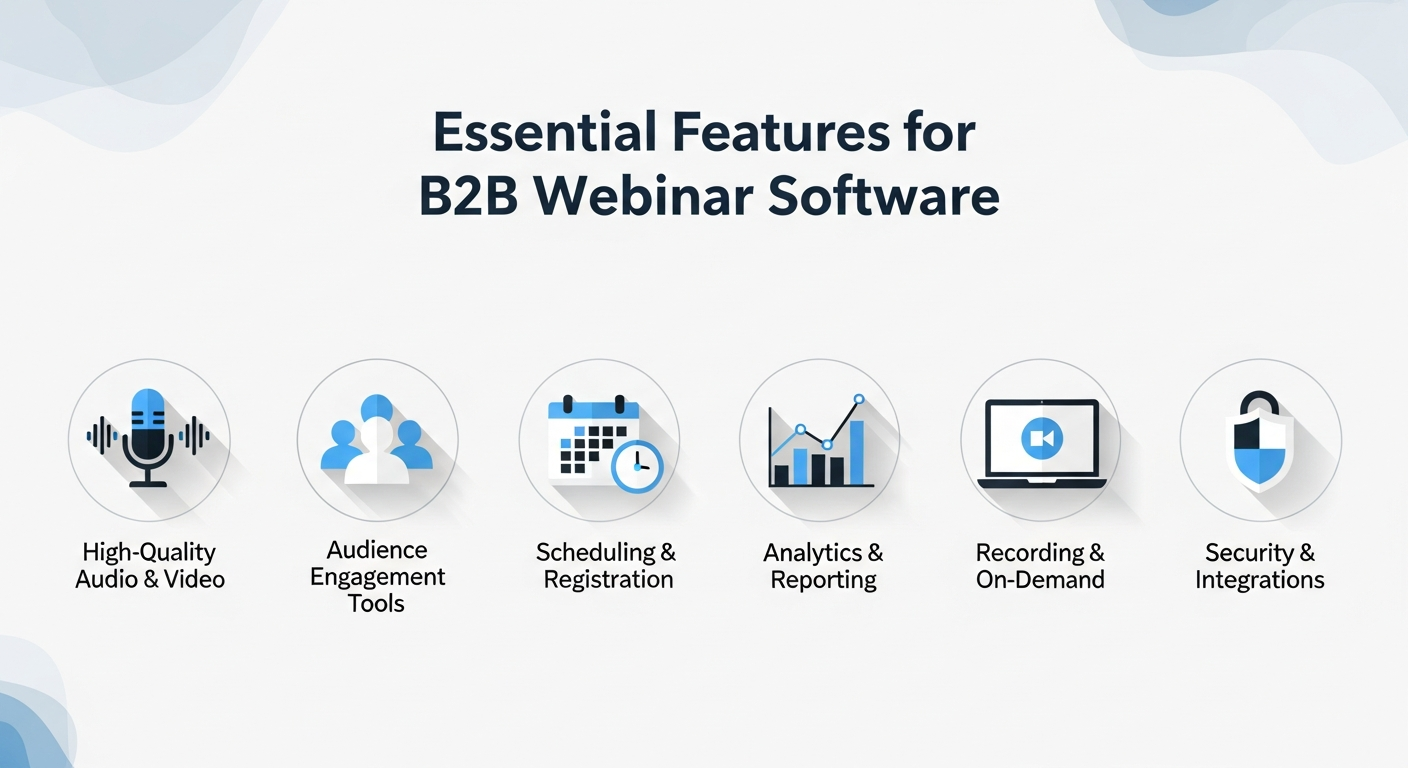
Registration and Landing Page Capabilities
Your webinar software should include customizable registration pages that align with your brand. Look for platforms that offer multiple registration form options, from simple email capture to detailed qualification questions.
Integration with your customer relationship management (CRM) system ensures seamless lead capture and follow-up. The best platforms automatically sync attendee information with your existing sales and marketing tools.
Automated email sequences for confirmations, reminders, and follow-ups reduce manual work while ensuring consistent communication with registrants.
Live Presentation Tools
Screen sharing and presentation modes should be reliable and high-quality. Look for platforms that support multiple presenters, slide transitions, and multimedia content without technical difficulties.
Interactive features like polls, Q&A sections, and chat functionality keep audiences engaged throughout your presentation. These tools also provide valuable insights into attendee interests and pain points.
Recording capabilities are essential for B2B marketing. Many prospects cannot attend live sessions, so on-demand access expands your reach and provides ongoing lead generation opportunities.
Analytics and Reporting
Comprehensive analytics help you understand webinar performance and optimize future sessions. Key metrics include registration rates, attendance rates, engagement levels, and post-webinar conversion data.
Attendee behavior tracking shows which parts of your presentation generated the most interest. This data helps you refine your content and identify the most effective messaging for your target audience.
Integration reporting connects webinar performance to your broader marketing metrics, showing how webinars contribute to your overall lead generation goals.
Top Webinar Software Options for B2B Marketing
Enterprise-Level Platforms
Zoom Webinar offers robust features for large-scale B2B marketing campaigns. The platform supports up to 50,000 attendees and provides comprehensive analytics, automated follow-up sequences, and seamless integration with popular CRM systems.
The platform’s reliability and familiar interface make it easy for both hosts and attendees to navigate. Advanced features include breakout rooms, whiteboarding, and custom branding options that enhance the professional experience.
Microsoft Teams Live Events integrates seamlessly with the Microsoft ecosystem, making it ideal for companies already using Office 365. The platform supports large audiences and provides strong security features important for B2B communications.
Mid-Market Solutions
GoToWebinar has long been a favorite among B2B marketers for its user-friendly interface and reliable performance. The platform offers strong automation features, including email sequences and CRM integrations.
Registration customization options allow you to create branded landing pages that match your company’s visual identity. The platform also provides detailed analytics and reporting that help you measure ROI effectively.
WebEx Events provides enterprise-grade security and scalability while maintaining ease of use. The platform supports multiple presenters, interactive features, and comprehensive reporting that B2B marketers need.
Emerging Platforms
Demio focuses specifically on marketing webinars with features designed to maximize lead generation and conversion. The platform offers advanced automation, detailed analytics, and seamless integration with popular marketing tools.
The user experience prioritizes simplicity for both hosts and attendees, reducing technical barriers that might prevent prospects from joining your sessions.
BigMarker combines webinar functionality with virtual event capabilities, making it suitable for companies running comprehensive digital marketing campaigns.
Pricing Considerations for B2B Webinar Software
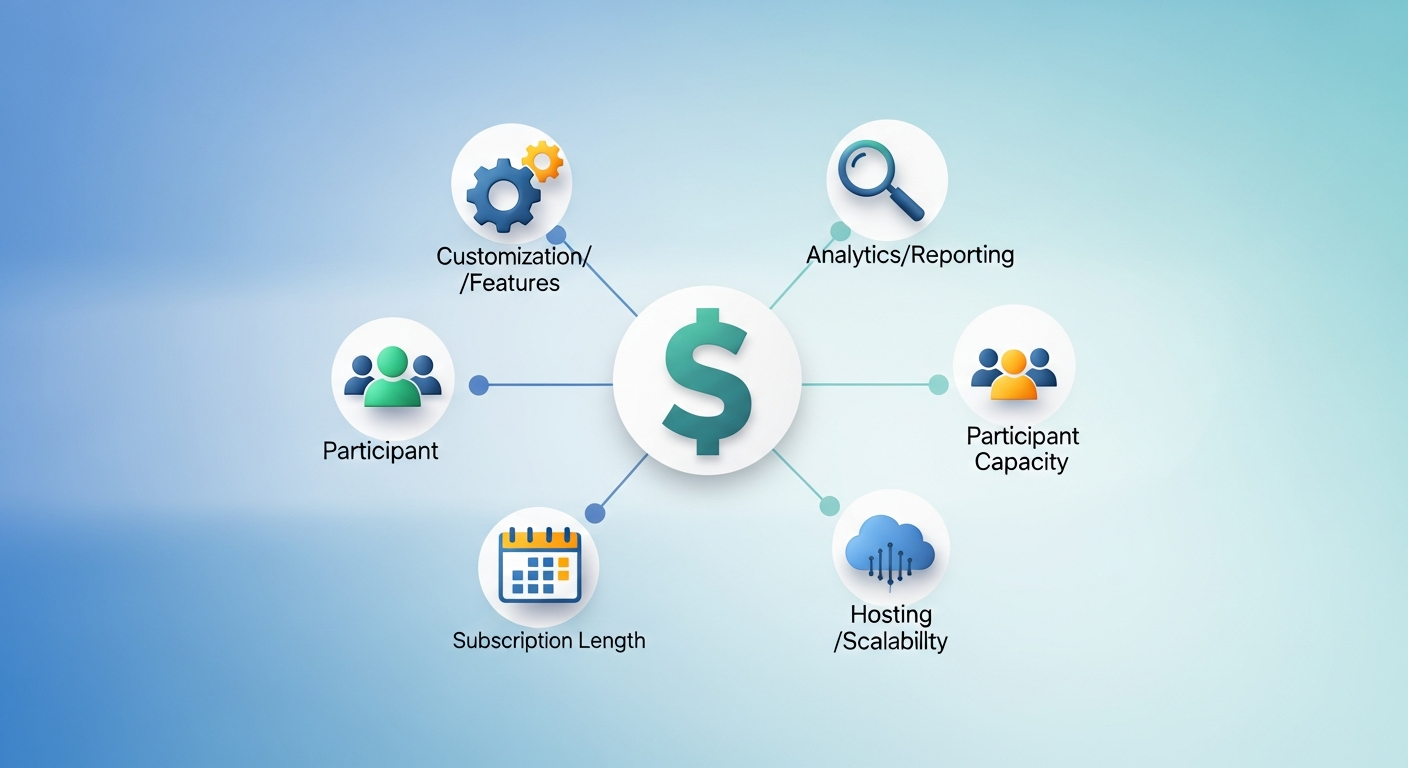
Cost Structure Analysis
Most webinar platforms use tiered pricing based on attendee capacity and feature sets. Entry-level plans typically support 100-500 attendees, while enterprise plans can accommodate thousands of participants.
Monthly versus annual pricing often provides significant savings for B2B marketers planning regular webinar campaigns. Annual plans typically offer 15-20% discounts compared to monthly subscriptions.
Per-event pricing might be more cost-effective for companies hosting occasional webinars, but regular marketers usually find subscription plans more economical.
Return on Investment Calculations
Calculate your webinar ROI by comparing software costs to lead generation value. If your average customer value is $10,000 and webinars generate qualified leads at a 5% conversion rate, the math often favors premium platforms with better features.
Lead quality improvements from better platforms can significantly impact your overall marketing ROI. Higher-quality leads convert at better rates and require less sales effort.
Time savings from automation and integration features should factor into your cost analysis. Platforms that reduce manual work free up marketing resources for other activities.
Best Practices for B2B Webinar Marketing
Topic Selection and Content Planning
Choose webinar topics that address specific pain points your target audience faces. Educational content performs better than promotional presentations for lead generation purposes.
Industry trends and insights attract attendees who want to stay current with market developments. Position your company as a thought leader by sharing research and analysis.
Case studies and success stories demonstrate real-world results while providing concrete examples prospects can relate to their own situations.
Promotion and Registration Optimization
Start promoting your webinar at least two weeks before the event date. Use multiple channels including email marketing, social media, and partner networks to maximize registration.
Landing page optimization significantly impacts registration rates. Remove navigation elements that might distract from your call-to-action and ensure your form only requests essential information.
Email sequences should include confirmation messages, reminder emails, and valuable resources that build anticipation for your event.
Post-Webinar Follow-Up
Follow up with attendees immediately after your webinar while your presentation is still fresh in their minds. Send the recording along with additional resources that extend the value of your session.
Segmented follow-up based on attendee engagement levels allows for more personalized communication. Highly engaged attendees might receive direct sales outreach, while others enter nurturing campaigns.
Non-attendee communication to registrants who missed the live session can still generate leads. Many people register with genuine interest but cannot attend due to scheduling conflicts.
Integration with Your B2B Marketing Stack
CRM Integration
Seamless integration with your CRM system ensures webinar leads automatically enter your sales pipeline. Look for platforms that sync attendee data, engagement metrics, and behavioral information.
Lead scoring should incorporate webinar attendance and engagement data. Prospects who attend multiple sessions or ask questions demonstrate higher buying intent.
Sales team notifications about high-engagement attendees enable timely follow-up while interest levels remain high.
Marketing Automation
Connect your webinar platform with marketing automation tools to create sophisticated nurturing campaigns. Attendee behavior should trigger appropriate follow-up sequences.
Dynamic content based on webinar topics and attendee interests personalizes your ongoing marketing communications.
Progressive profiling allows you to gather additional information about leads over time rather than requesting everything during registration.
Measuring Webinar Success
Key Performance Indicators
Track registration rates, attendance rates, and engagement metrics to understand your webinar performance. Industry benchmarks suggest 40-50% attendance rates for B2B webinars.
Lead quality metrics matter more than quantity for B2B marketing. Measure lead-to-opportunity conversion rates and sales cycle impact from webinar-generated leads.
Customer acquisition cost from webinar leads should be compared to other marketing channels to optimize your budget allocation.
Long-Term Performance Analysis
Analyze how webinar leads perform throughout your sales funnel compared to other lead sources. This data helps justify webinar investments and optimize your approach.
Content performance tracking shows which topics generate the most qualified leads, helping you plan future webinar topics.
Presenter effectiveness analysis helps you identify which team members connect best with your target audience.
Maximizing Your Webinar Marketing Investment

Choosing the right webinar software represents just the beginning of successful B2B marketing campaigns. The most effective approach combines robust technology with strategic content planning and systematic follow-up processes.
Start by clearly defining your webinar goals and target audience. This foundation guides your platform selection and content strategy, ensuring every element supports your broader lead generation objectives.
Focus on providing genuine value to attendees rather than delivering sales pitches. Educational content builds trust and positions your company as a helpful resource, making prospects more likely to engage with your sales team.
Remember that webinar success depends on consistent execution over time. Regular webinars build audience expectations and establish your company as a reliable source of industry insights. The compound effect of ongoing webinar marketing often exceeds the results of one-time campaigns.
Conclusion
Webinars are essential B2B marketing tools for generating qualified leads and building trust with prospects. Effective execution combines reliable software, strategic content, and integrated follow-up. By consistently delivering educational value and leveraging analytics, businesses can increase engagement, shorten sales cycles, and maximize ROI. Webinars strengthen thought leadership, enhance customer relationships, and serve as a cornerstone of modern B2B marketing strategies.
1. What is a B2B webinar?
A B2B webinar is an online, interactive session designed specifically for business audiences. Unlike consumer-focused webinars, B2B webinars focus on educating prospects about industry trends, product solutions, or business strategies. They combine presentations, slides, live demos, and interactive features like polls and Q&A sessions to actively engage attendees. Beyond education, B2B webinars serve as lead generation tools by capturing registrant data, enabling marketing and sales teams to identify prospects who are genuinely interested. The recorded content can also be repurposed for future campaigns, blog posts, or email nurturing sequences, extending the value of a single session across multiple marketing channels.
2. Why are webinars important for lead generation?
Webinars attract qualified, highly engaged leads who are actively seeking solutions to business challenges. Unlike passive content, webinars require attendees to invest time, which demonstrates interest and buying intent. During the session, marketers can interact with prospects, gather insights through polls or questions, and identify pain points, allowing for more targeted follow-up. Captured leads can be scored and entered into sales pipelines, improving conversion efficiency. Webinars also help nurture relationships by positioning the company as a thought leader. Over time, repeated webinars build a loyal audience that trusts the brand, making it easier to convert attendees into paying customers.
3. Which features are essential in webinar software?
Effective webinar platforms provide a combination of functionality to ensure smooth hosting, engagement, and lead capture. Key features include customizable registration pages, automated confirmation and reminder emails, live presentation tools, screen sharing, and multiple presenter support. Interactive capabilities like polls, Q&A sessions, and chat encourage attendee engagement. Recording functionality allows sessions to be reused on-demand for additional leads. Integration with CRM and marketing automation platforms ensures captured data flows seamlessly into lead nurturing workflows. Analytics and reporting track attendance, engagement, and conversion metrics, helping marketers optimize future webinars and measure ROI accurately.
4. Can webinars integrate with marketing automation?
Yes, integrating webinars with marketing automation platforms amplifies their impact. Behavior-based triggers—such as registration, attendance, or engagement during the webinar—can initiate personalized follow-up sequences via email, SMS, or in-app notifications. Automated workflows can segment attendees based on engagement levels, allowing sales teams to prioritize high-potential leads. Integration also allows for scoring and nurturing leads over time, aligning webinar-generated contacts with broader campaigns. By connecting webinar platforms to marketing automation, companies can track the full customer journey, measure conversions, and improve targeting accuracy, making the webinar a central part of a cohesive, data-driven lead generation and nurturing strategy.
5. How do webinars improve credibility?
Webinars position businesses as industry authorities by demonstrating expertise and delivering valuable insights in real-time. Hosting knowledgeable presenters, offering actionable tips, and addressing audience questions live builds trust with attendees. Providing data, research, or case studies enhances perceived authority and strengthens your brand’s reputation. High-quality production and professional execution further reinforce credibility. Over time, consistent webinar delivery establishes a reliable presence in your industry, helping prospects associate your company with thought leadership and expertise. Credibility gained through webinars makes leads more receptive to future communications and improves the likelihood of conversions, partnerships, or repeat business.
6. What is the ideal audience size for B2B webinars?
The ideal audience size depends on your industry, webinar goals, and platform capabilities. Smaller, niche webinars (50–200 participants) often foster deeper interaction, allowing personalized engagement and tailored responses. Medium-sized webinars (200–500 participants) balance reach and interactivity, suitable for lead generation campaigns. Large-scale webinars (1,000+ participants) maximize exposure, brand awareness, and lead volume but may limit real-time interaction. Regardless of size, engagement strategies like polls, chat, and Q&A sessions are critical for maintaining attendee attention. Selecting the right platform to accommodate your target audience size ensures smooth delivery and supports optimal engagement metrics.
7. Should webinars be recorded?
Absolutely. Recording webinars allows attendees who missed the live session to access content on-demand, expanding lead generation potential. Recorded webinars can be repurposed into blog posts, video snippets, social media content, and email nurturing campaigns. They also provide an internal resource for sales and marketing teams to reference product details, strategies, or answers to frequently asked questions. Additionally, recorded sessions offer opportunities for A/B testing content, refining messaging, and improving future presentations. On-demand access ensures prospects can consume the content at their convenience, increasing engagement, brand visibility, and overall ROI from a single webinar session.
8. How can engagement be maximized?
Maximizing engagement requires a combination of compelling content, interactive features, and audience-centric design. Use polls, live Q&A, breakout sessions, and chat to keep attendees active throughout the webinar. Craft content that addresses specific pain points, provides actionable insights, and aligns with attendees’ business goals. Encourage participation by asking questions, running live surveys, and responding promptly to comments. Visual aids, slides, and multimedia elements maintain attention, while clear calls-to-action guide attendees toward next steps. Pre-webinar promotion and reminders, along with post-webinar follow-ups, also enhance engagement, ensuring participants remain connected and motivated to act on the presented information.
9. Do webinars work for all B2B industries?
Yes, webinars are effective across diverse B2B sectors, particularly in SaaS, finance, professional services, technology, and healthcare. They suit industries where educating prospects on complex topics, demonstrating expertise, and nurturing relationships is crucial. Webinars provide opportunities to showcase product features, explain solutions, and address industry-specific challenges. Industries with longer sales cycles benefit especially, as webinars allow ongoing engagement with prospects. Even niche sectors can leverage webinars for lead generation, training, and thought leadership. Tailoring content to the audience ensures relevance, while consistent execution builds credibility and trust over time, making webinars a versatile tool for almost any B2B marketing strategy.
10. How do you measure webinar success?
Webinar success is measured using both quantitative and qualitative metrics. Registration rates indicate audience interest, while attendance rates show engagement. Interactive metrics like poll responses, Q&A participation, and chat activity reflect attendee involvement. Post-webinar leads can be tracked through CRM systems to measure conversion rates and sales pipeline impact. ROI calculations compare lead value and revenue generated against platform costs. Additional qualitative indicators include attendee feedback, satisfaction surveys, and social engagement. Measuring webinar success helps marketers refine content, optimize promotion strategies, and adjust delivery for higher impact in future sessions.
11. Are webinars cost-effective?
Webinars are highly cost-effective when optimized with automation, repurposing, and strategic promotion. Platforms scale to accommodate various audience sizes, reducing overhead compared to in-person events. Automation tools handle registration, reminders, follow-ups, and lead scoring, minimizing manual effort. Recorded sessions extend content value across multiple channels. Lead quality tends to be high because participants actively engage with the content, improving conversion rates. Compared to traditional marketing methods, webinars reduce travel, venue, and logistics expenses while delivering measurable ROI through qualified leads, audience growth, and brand authority, making them a smart investment for B2B marketing teams.
12. How often should webinars be hosted?
Consistency is key. Hosting webinars regularly—monthly, quarterly, or according to industry relevance—helps build trust, establish thought leadership, and maintain audience engagement. Frequent webinars keep your brand top-of-mind with prospects, providing ongoing opportunities for lead generation and nurturing. A predictable schedule encourages repeat attendance and loyalty, while varying topics address different pain points and showcase expertise. Balancing frequency with quality ensures each session delivers value, avoiding audience fatigue while maximizing long-term ROI. Over time, consistent webinars create a reliable channel for education, relationship building, and conversion in your B2B marketing strategy.





Webinar Analytics: A Complete Guide to Measuring Success and Improving Performance
The Ultimate Webinar Follow-Up Strategy to Turn Attendees into Customers
Webinar Accessibility Best Practices: How to Make Your Online Events Inclusive for All
Webinar Personalization: Tailoring Content to Audience Segments for Maximum Engagement